Emma, Ida, Rosi and Thea: Our Chickens in the Garden
Since this spring, four new residents have been living in our garden: the hens Emma, Ida, Rosi and Thea. They were still quite young at first, but by now they have settled in well and bring plenty of life to the run.
A rooster named Theo was also part of our small flock at first. He kept order in the coop and warned the hens of danger, but over time he became increasingly protective of his hens and started going after people who came near the coop. That was not compatible with running a guesthouse, so he has since moved elsewhere. The four hens have been doing well ever since, especially since hens do not actually need a rooster to lay eggs.
Emma, Ida, Rosi and Thea usually explore the run together as a group, following each other from corner to corner.
About four weeks ago, our hens laid their first eggs. The timing fits well. Depending on the breed, hens become ready to lay at around 20 to 24 weeks old, and our four have been growing up with us since this spring.
Forming a single egg inside a hen's body takes roughly 24 to 26 hours. That is why a hen does not lay an egg every single day, but usually at intervals of a bit more than a day.
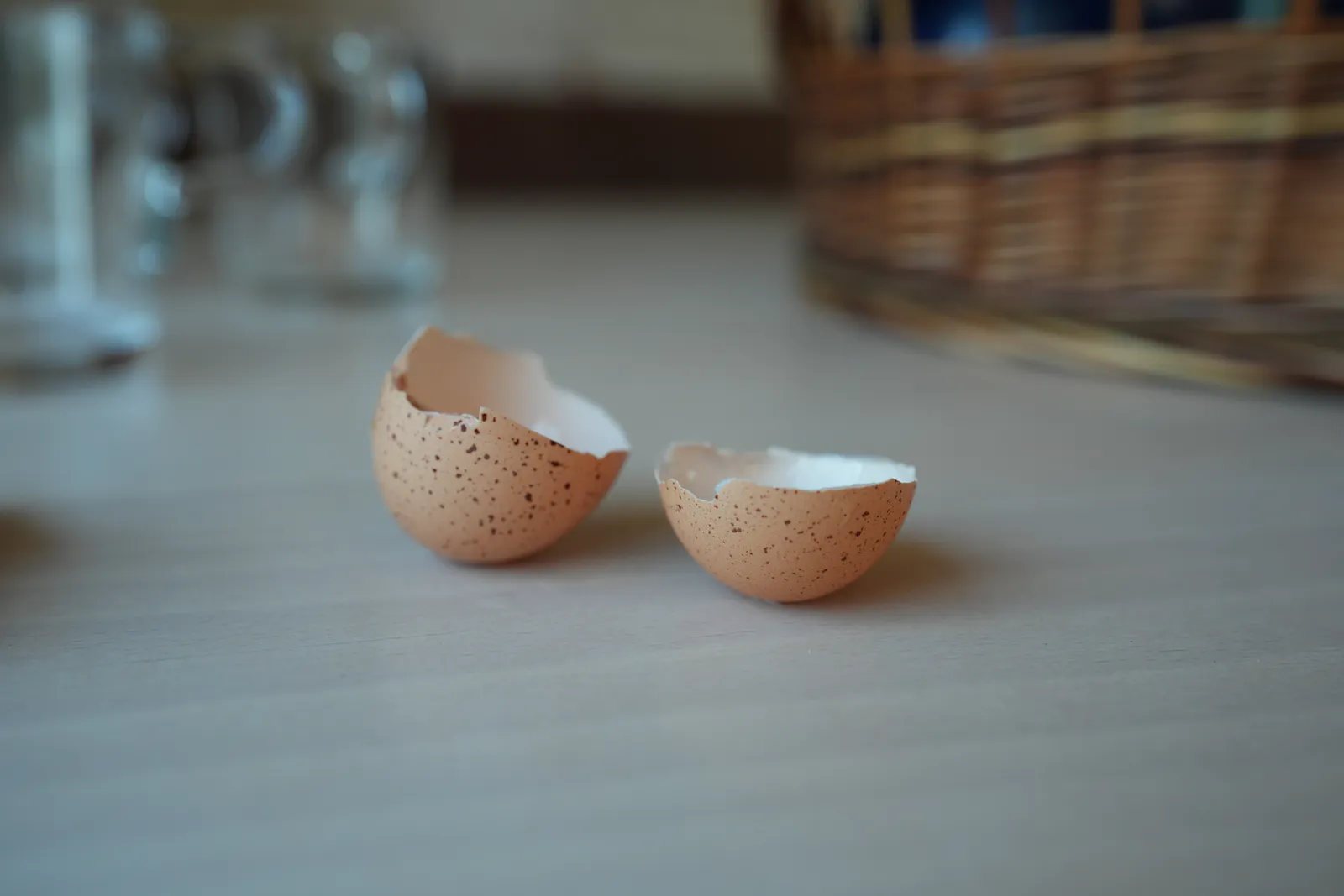
The shell's brown colour, by the way, only appears shortly before laying. A pigment called protoporphyrin is applied to the finished shell in the last few hours, before that it is still white.
By now, Emma, Ida, Rosi and Thea reliably lay enough eggs for us to offer them to our guests at breakfast too. Anyone staying with us can try the eggs, straight from our own garden and without a long journey.
A simple trick shows how fresh an egg really is. Put it in a glass of water: a fresh egg sinks to the bottom. Older eggs have a larger air pocket and tend to stand up in the water or even float.
If you are staying with us, feel free to stop by the chicken run. Emma, Ida, Rosi and Thea always enjoy a visit.